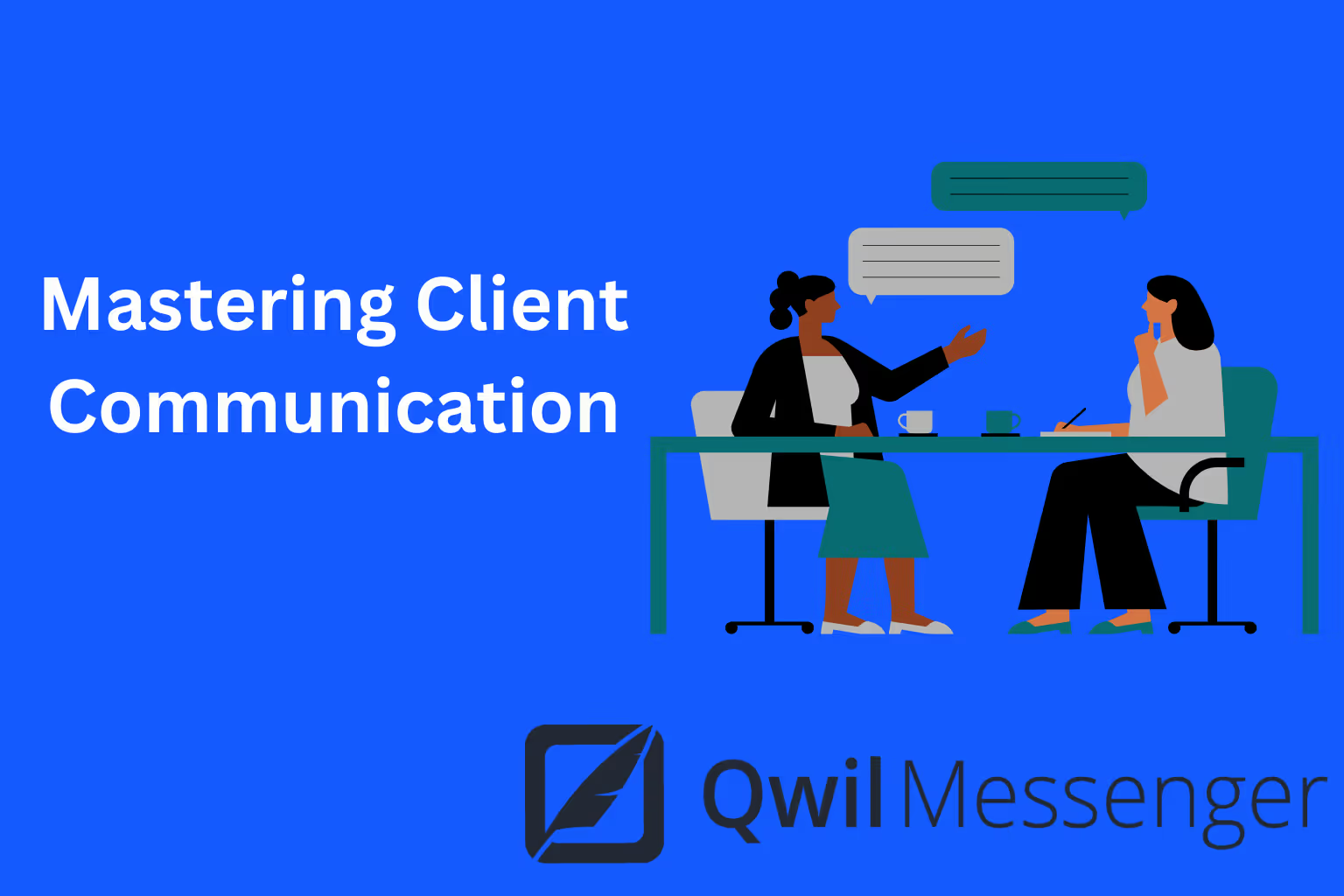
At Qwil Messenger, we believe strong communication is the foundation of every successful client relationship. It’s not just about speaking clearly. It’s about building trust, solving problems early, and making clients feel valued at every step.
When communication is easy and secure, relationships grow. When communication breaks down, even small problems can turn into big issues. Projects get delayed, and then clients feel frustrated. Opportunities slip away as a result.
Today, clients expect more than quick answers. They want clear, personalized, and safe communication — on their terms.
At Qwil, we help you make every client interaction simple, secure, and personal. In this guide, we’ll show you how to master client communication so that you can create relationships that last.
Good communication starts with understanding.
Before you send your first message, you must understand what matters to your client. What are their goals? What are they worried about? What do they expect from you?
At Qwil, we recommend starting every relationship with an open conversation. Ask clients:
This shows clients that you care — and that you are paying attention.
Active listening is key here. Listening means more than hearing words; it means showing the client you understand them.
For example, if a client says, "I’m worried about security," don’t just say, "We use encryption." Instead, show them how Qwil keeps their information safe with bank-grade security and private chat spaces.
Understanding also means noticing small things. If a client sounds rushed, it might mean they prefer quick updates instead of long calls. If they ask a lot of questions, they may also need extra reassurance.
Using Qwil Messenger helps you stay close to these needs because everything happens in one safe place. Clients can message when they want — without worrying about security risks.
When you truly understand your clients, better communication comes naturally.
Without a strategy, communication can get messy.
Clients may feel ignored, and then important updates may be missed. Confusion can slow down projects as a result.
That’s why at Qwil, we encourage businesses to create a clear communication strategy .
Your strategy should cover:
It’s important to match the strategy to the client’s style so that you meet their expectations. Some clients want lots of check-ins, while others prefer only key updates.
The beauty of using Qwil is that you can adapt easily. You can message for quick updates, share files when needed, and even set up group chats for teams — all without switching platforms.
A good strategy keeps everyone on the same page. Clients feel confident, and then teams work more smoothly. Projects move forward without confusion.
Remember: a great communication strategy doesn’t just talk at clients. It invites them to be part of the journey.
Turning your strategy into action takes a clear communication plan.
Your plan should answer:
At Qwil, we believe simple plans are the best plans. You don’t need pages of rules. You just need clear steps so that everyone can follow them easily.
For example, your plan might say:
Your plan should also cover what happens when things go wrong.
For instance:
Because all chats, files, and updates are secure in one place, your plan stays simple. Clients never have to search old emails, and they always know where to go — and they trust what they find.
A strong plan gives your team a roadmap for great client communication, every time. That is why we are the world's leading client communication platform .
Good communication isn’t just about what you say. It’s also about how you say it.
Here are the key techniques we use at Qwil:
When a client speaks, really listen. Let them finish, and then ask clarifying questions if needed. This shows respect and reduces mistakes.
Example:
Client says, "I'm worried about timing."
You might ask, "Would it help if we set smaller milestone dates?"
Avoid confusing terms so that clients can understand quickly. Stick to short, easy-to-read sentences.
Instead of:
"We’ll liaise interdepartmentally to facilitate the rollout."
Say:
"Our team will work together to get this done."
Use positive words, even when delivering tough news.
Example:
Instead of saying, "This is delayed,"
say, "We’ve adjusted the timeline so that everything meets our quality standards."
Personal touches also matter. Use the client’s name. Mention project details they care about. Send a personal message after big achievements.
Even when everything is going well, stay visible. A quick "Just checking in!" can make clients feel supported.
At Qwil , these techniques are part of every interaction. It’s how we make clients feel confident, respected, and secure.
Problems will happen. But with good communication, they don’t have to damage trust.
Here’s our conflict resolution approach at Qwil:
First, give the client space to explain the issue fully. Don't interrupt. Don't argue. Also, take notes so that you can respond thoughtfully.
Say things like:
"I understand why you’re frustrated,"
or
"Thank you for sharing your concern with us."
Shift the conversation toward solving the problem.
Example:
"If delivery is a concern, let's adjust the schedule so that it fits your needs."
After resolving the conflict, send a summary message on Qwil. This confirms what was discussed and helps prevent future confusion.
With a platform like Qwil , it’s easier to manage conflicts because all communication stays organized and secure — no lost emails or misquoted messages.
Handling conflict well often leaves relationships stronger than before.
Winning a client feels good. Keeping them feels even better.
At Qwil, we know that strong, ongoing communication is the key to client loyalty.
Here’s how to make it happen:
Retention is about relationships, not transactions.
And relationships are built on great communication.
Once you create a communication strategy, you need to put it into action — and track how well it works.
Here’s how we recommend doing it at Qwil:
Mastering client communication is not optional. It’s the core of a successful, growing business.
At Qwil Messenger, we help businesses like yours communicate in a way that is:
When you understand client needs, plan communication carefully, handle conflicts with care, and measure your success, you build trust that lasts for years.
And when you use Qwil Messenger, you can do it all with one secure, easy-to-use platform. Video Chat, Message, secure document sharing and signing all in one platform.
Here’s what to remember:
By following these steps — and with the right tools — you’ll master client communication and unlock real, lasting business success.
Ready to take your client relationships to the next level? Qwil is here to help.
Get your free trial today


Protect client data with messaging they'll actually use.
Chat, share and sign in one place
Secure & compliant by design
Replace email and WhatsApp


.png)

.svg)